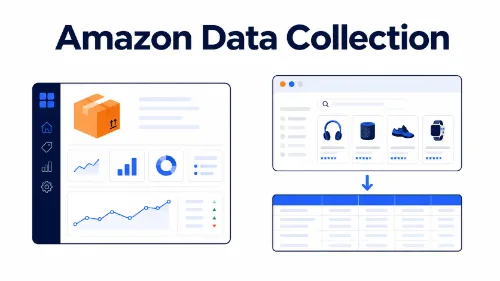

A cron job grabs 500 product pages every six hours, checks title, price, and availability, and alerts the data analyst only when something breaks. Planning that job, the same three options keep coming up: put proxies in front of an HTTP client, drive a Playwright browser, or call a managed web scraping API. They are often listed side by side because all three can appear in one data-collection stack, yet each does a different job.
Put a proxy in front of an HTTP client and the request leaves through a different route; everything else stays the same. In Playwright, the same URL runs in a real browser session—one that can click, scroll, and submit forms. With a scraping API, page retrieval happens somewhere you no longer operate. The first question, then, is which one your workload has: route, browser state, or infrastructure.
The decision comes down to what you are willing to operate. Browser workers, route selection, retries, and capacity management are all work; pick the smallest layer that covers the workload.
The short answer
| Option | What it provides | Use it when | Your team still owns |
|---|---|---|---|
| Proxies | A different network route or egress identity | An HTTP client already returns the content you need, but the route or region matters | Request logic, rendering, sessions, retries, validation, rotation, and monitoring |
| Playwright | Programmable Chromium, Firefox, or WebKit sessions | The workflow requires rendering, clicks, scrolling, forms, or browser state | Browser deployment, queues, concurrency, proxies, recovery, observability, and extraction |
| Web scraping API | Managed page retrieval through HTTP | You need page results without operating most of the retrieval infrastructure | Vendor evaluation, request design, output validation, downstream parsing, governance, and fallback rules |
The table is a division of responsibility, not a maturity ladder. Use it to find your workload’s weak point, then start there.
Default recommendation
- When the required fields are in the initial HTML, an HTTP client is usually enough. Add a proxy only when a specific route or region is the missing requirement.
- When an authorized workflow needs clicks, forms, scrolling, or browser state, Playwright is the better starting point.
- A managed web scraping API is worth a trial when the team does not want to run browser workers, proxy routing, retries, and capacity management itself.
- A proxy is not the default answer to rendering, interaction, retry policy, or content validation.
Each path has a point where it stops working. When the data appears only after browser interaction, an HTTP-only path is out. When stable HTML is already retrievable by a normal client, Playwright is overkill. And a managed API must document support for long, custom, authenticated interactions before you trust it with them.
Whatever path you choose, apply the same check: does the response contain the requested data? A successful result is a page containing the expected fields, a valid CSV, or a readable page capture. An HTTP status code or a vendor envelope confirms that delivery happened; it says nothing about the data.
Start with the page, then the operating model
Read the initial HTML first
If the fields you need are already in the initial HTML response, use a normal HTTP client first. A proxy can be added when a particular network path or regional exit is genuinely required; it does not execute JavaScript or decide whether the HTML contains the expected record.
A team checking title, price, and availability across 500 stable product pages every six hours should first inspect the initial response. If all three fields are present, a browser is unnecessary. It adds browser workers, session handling, and capacity management without improving the data. The team still needs bounded retries, rate-limit handling, and checks that the expected fields remain present as the target changes.
Treat a 200 OK response as transport success, not collection success. The request succeeded. The collection did not. A changed page template, a missing price field, or a page that is not the requested product should enter a review or fallback path. An HTTP client is the wrong default when the required record appears only after client-side interaction.
RFC 9110 describes an HTTP proxy as an intermediary selected by a client to handle a request. That boundary matters: a proxy is network infrastructure, not a browser automation system.
Interaction-heavy workflows need Playwright
Playwright is the right level of control when the page needs browser behavior: opening a menu, setting a filter, scrolling through lazy-loaded results, submitting a form, or waiting for a client-side request. Its browser contexts make it practical to isolate sessions, and it supports HTTP and SOCKS proxies when the workflow also needs a particular route.
Consider an authorized partner portal where an operator selects a date range, applies filters, waits for an asynchronous request, and exports a CSV report. The interaction sequence is the requirement, so Playwright is the primary path. A proxy cannot perform those steps, and a managed API that returns a rendered page should not be assumed to complete them.
Validate the exported file itself—that it is non-empty, has the expected columns, and represents the selected filters—rather than stopping at the download event. Browser workers can also fail before the export stage. High concurrency can exhaust memory, isolated sessions can expire, and a reused session can expose the wrong state. The Playwright Docker guidance is a useful reminder that browser dependencies, process handling, resource limits, isolation, and debugging evidence need deliberate operation. Treat authenticated state as sensitive, isolate it, and define how it is removed.
Many targets and a small team: trial a managed API
A managed web scraping API works for a team handling changing targets that does not want to keep a browser fleet ready, choose routes, retry failed requests, and plan for spikes in capacity. It stands out when demand is irregular and the team would rather invest in parsing and data quality than running collectors.
Clawoxy Web Unblocker is a managed API worth testing when your workload falls within those boundaries. It accepts a target URL and can return HTML or a PNG page capture. Requests can set country, enable JavaScript rendering with js_render, and use await_ms when a page needs more time before capture. It can remove some of the work of running browser workers, selecting routes, retrying requests, and keeping capacity available. It does not replace a long, custom, authenticated browser interaction. Keep Playwright or another self-managed path for workflows that require that degree of control.
Before increasing traffic, try representative URLs. Check the page content, not only the response envelope. Look for challenge, error, and partial-content pages; measure latency; confirm regional requirements; classify failures; and decide what handles a failed request. Route more traffic only after the API consistently returns pages holding the expected fields or a readable capture.
Non-negotiable control means running your own collector
Self-managed collectors are often the better fit when exact browser versions, extensions, deep network inspection, strict data-location rules, or a tightly controlled runtime are non-negotiable. They also make sense when interaction logic is central to the product rather than an occasional exception.
That choice keeps the required controls inside your environment, but it also makes browser upgrades, queue backpressure, incident response, and debugging evidence part of the service you operate. Take this path when those controls are requirements; a working browser proof of concept alone should not decide the architecture.
Compare ownership cost, not the first successful request
A proxy proof of concept can be short. Playwright often gets a difficult page working quickly, and an API makes the first integration feel simple. None of those first results describes the full operating cost.
For each option, count the work needed to keep the output useful. Failed requests need a review path, idle browser capacity still bills, and every target-side change means re-checking extraction and monitoring. A fixed set of simple pages may justify a small HTTP collector; a changing catalogue of browser-heavy targets may not.
Use a hybrid design only when the routing rule is clear. Route complete initial HTML to the HTTP client, interaction-heavy requests to Playwright, and only requests inside the API’s tested boundaries to the managed API. The split is worth it only when each layer’s failure modes look different: an HTTP path breaks on markup changes, a browser path on session or memory issues, a managed API on vendor-side limits. If all three fail on the same page for the same reason, the split adds operational overhead for no reliability gain. Adding all three layers by default makes the system harder to run without improving simple requests.
Run a small trial before committing to an architecture
Use representative pages rather than one convenient demo URL. For each path you test:
- Check that automated access is appropriate for the target, purpose, and data involved. Review terms, explicit access controls, and
robots.txt; RFC 9309 notes that the Robots Exclusion Protocol is not access authorization. - Define what makes an output usable: expected fields, an acceptable page capture, freshness, and latency.
- Record why a request failed and stop retrying when the failure is not temporary. A
429 Too Many Requestsresponse may includeRetry-Afterunder RFC 6585; respect it and use bounded retries with backoff. - Compare engineering effort and operating cost alongside usable output. Do not route the whole workload until the failure modes are understood and it is clear who runs the browsers, who retries failed jobs, and who investigates bad output on a normal day—not just on the first incident.
Check whether the running cost stays proportionate as the target set grows. If the route is the only problem, a proxy is enough; if stable HTML still needs a browser fleet, that cost is your call; a managed API earns its fee only when it takes browser seats, proxy routing, and retry handling off your plate. When you are unsure, run the small trial from the previous section on the pages you actually collect instead of reasoning about the whole workload from a demo.
FAQ
Can Playwright replace proxy rotation?
No. Playwright controls a browser session; proxies determine the network route and egress identity. A Playwright workflow that needs a specific region or exit still requires proxies underneath. If a different route is all the workflow needs, a proxy alone is the lighter setup.
Are web scraping API, Playwright, and proxies interchangeable?
No. They are not interchangeable. Proxies change the route, Playwright adds a browser session, and a scraping API handles retrieval—choose the one your workload lacks.
When should you use a managed web scraping API?
When the initial HTML lacks what you need, the interaction is simple, and your team does not want to run browser workers, proxy routing, retries, and capacity management itself. Try the API on the exact URLs you plan to collect, then scale traffic only after it consistently returns the expected fields or a readable capture.
How do I know if I need a proxy?
You need a proxy only when a particular network route or regional exit is the missing requirement. A proxy does not render pages, retry requests, or validate content. If your HTTP client already returns the expected fields, adding a proxy changes nothing about the data.
What is the check that decides success for any approach?
Whether the response contains the requested data: expected fields in the page, columns in the CSV, or a readable capture. An HTTP status or a vendor envelope only proves delivery, not collection.